
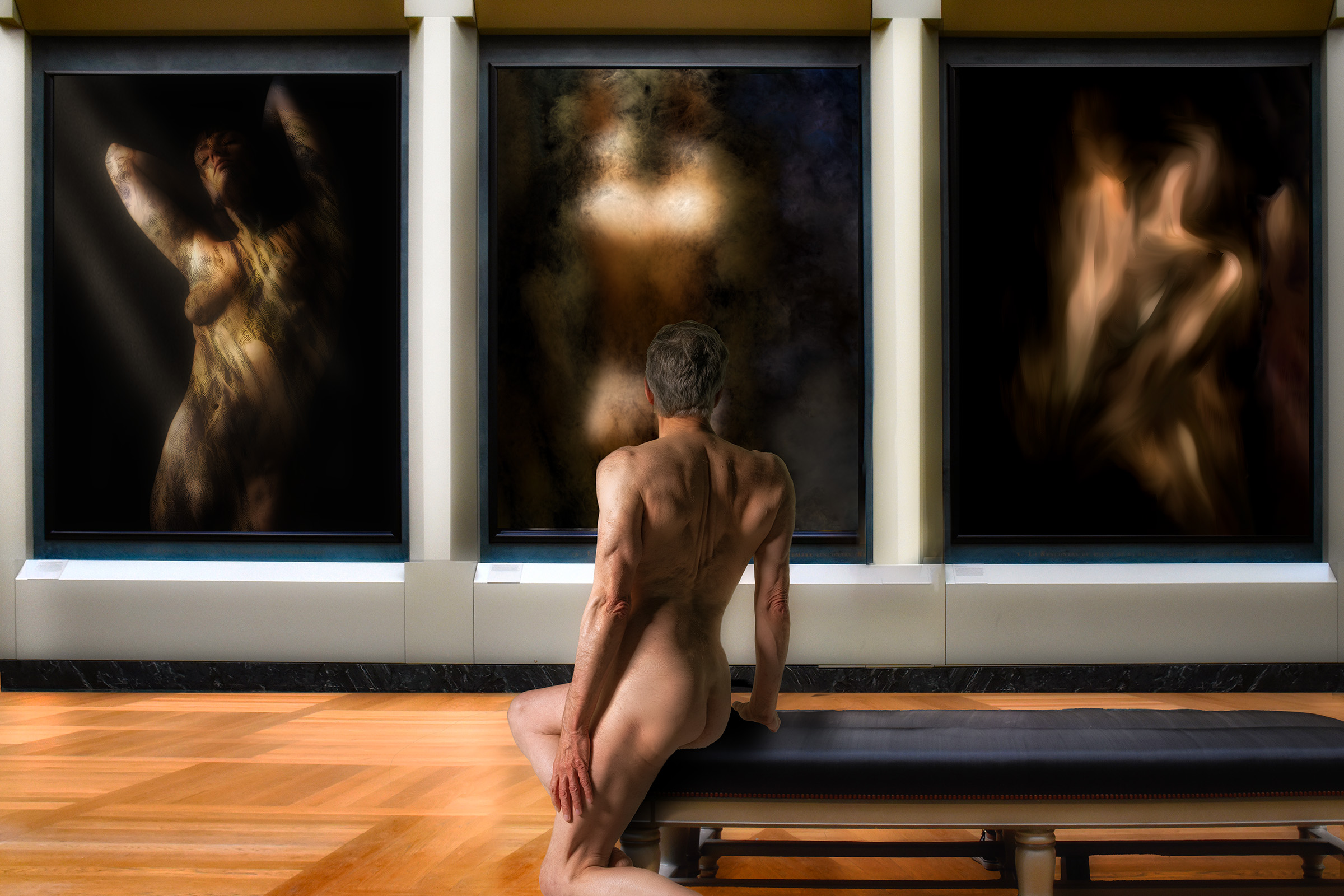
The image came from a dream. I was attending the opening of an exhibition, but somehow I was its only visitor.
That simple premise stayed with me because of the questions it raised. What does it mean to make something deeply personal and then put it on a wall for others to see? And what remains when the imagined audience disappears? Are we still performing, revealing, questioning—or simply looking at ourselves?
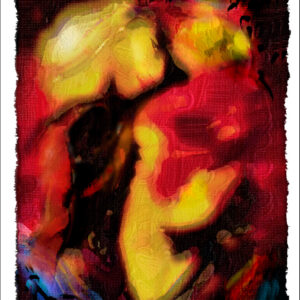
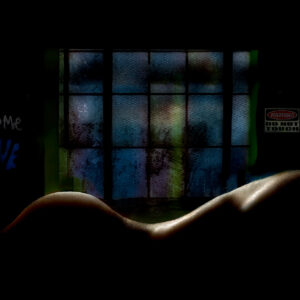
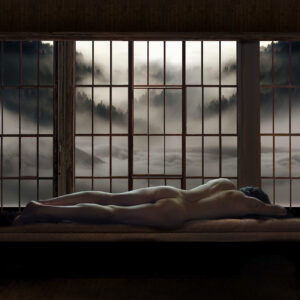
In Private Opening, a solitary nude figure sits before three monumental images of the body. Each presents the figure differently. One is illuminated but partially swallowed by darkness; another seems to materialize from a cloud of pigment and memory; the third dissolves almost completely into gesture and movement. Together they suggest less a conventional exhibition than three unstable versions of embodiment—three ways in which the self might be revealed and concealed at the same time.
The seated figure is sharply present by comparison. Seen from behind, he cannot return our gaze. Instead, he looks into the artwork, creating a chain of observation: we look at him as he looks at images of bodies that may, in some sense, also be versions of himself. The distinction between artist, model, artwork, and audience begins to collapse.
The dream’s empty gallery is important to me. Without other visitors, there is no approval to seek and no judgment to resist. There is only the encounter between the person who made the work and whatever the work has become. The nudity therefore becomes less about exhibitionism than about the absence of defenses.
Perhaps that is what the dream was asking: When no one else is watching, what do we see when we finally sit before our own work—and ourselves?


Reviews
There are no reviews yet.